


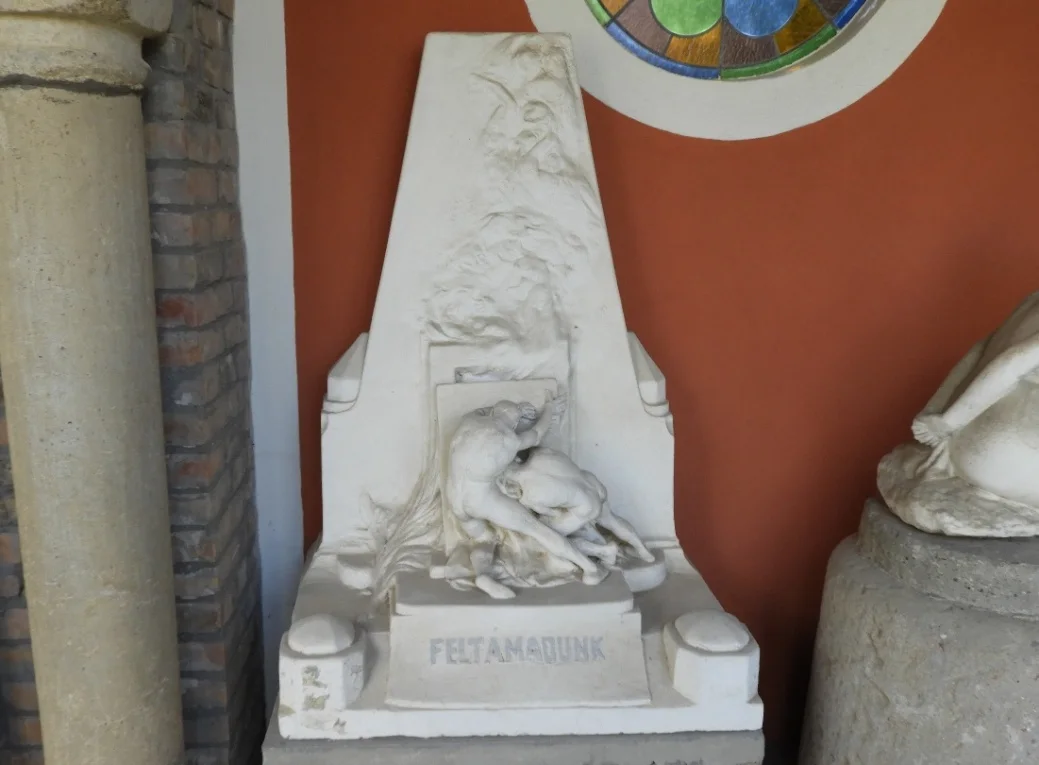
The tomb monument design entitled ‘We Shall Rise’ is one of Bory Jenő’s funerary compositions, presenting the opening of the grave and the resurrection of the soul in sculptural form that is dramatic yet playful.
Bory Jenő created ‘We Shall Rise’ for a competition during his years at college. Although the design was never realised, its plaster model survives and can now be seen beneath the arcades of the Court of a Hundred Columns at Bory Castle in Székesfehérvár.
The central idea of this monumental tomb design is the Christian concept of resurrection. In the lower part of the composition, two human figures work together to prise open the sealed gate of the grave. From the opening tomb, human figures and heads rise upwards amid swirling forms, as if passing beyond the bounds of earthly existence and proceeding towards a higher spiritual world. The work thus presents not the finality of death, but the liberation of the soul and the hope of resurrection.
Contemporary critics also considered the design noteworthy. In 1925, the daily newspaper Magyarság described it as follows: ‘Two stooping figures wrench down its door, and in the swirling bands within the opening the resurrected souls rise like smoke. This little, naïve design fundamentally reveals the true Bory, the playful creator who, with effortless, carefree youthfulness, solves even the greatest problems without great exertion. He torments neither himself nor the viewer.’
This observation captures the work’s distinctive character well. Here Bory Jenő places the emphasis not on the pain of mourning or the tragedy of death, but on hope in the afterlife and faith in the immortality of the human soul. In the composition, the grave appears not as an ending, but as a passage opening towards another form of existence.
We Shall Rise occupies a unique place among Bory Jenő’s tomb monument designs. While many of his monuments feature portraits, allegorical female figures or religious symbols, in this design the event of resurrection itself becomes the subject of sculptural representation. Religious, symbolic and powerfully narrative at once, the work already anticipates its young creator’s wealth of imagination and monumental vision.