Child figures form a distinct group within Bory Jenő’s oeuvre. For the artist, who was deeply attached to his family, childhood was not merely a charming subject, but also an opportunity to express purity, playfulness, joie de vivre and the instinctive beauty of human nature. His depictions of children are free from pathos and academic rigidity; his figures are direct, lively and testify to affectionate observation.
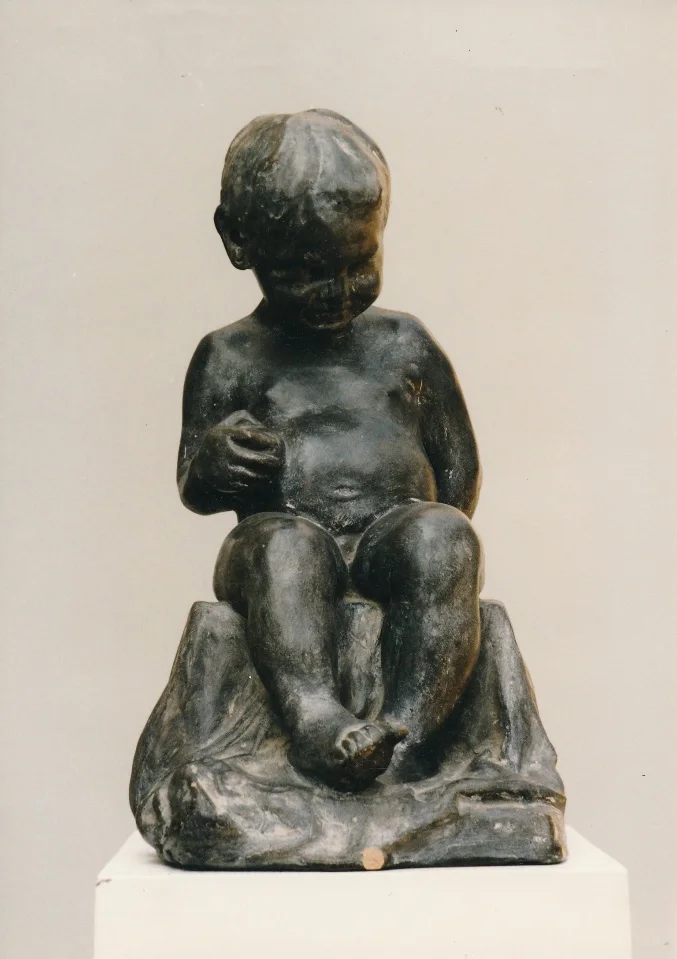
Child portraits and child figures form an important part of Bory’s work in small-scale sculpture. This group includes Bandika, the work that first brought him significant success, which he exhibited at the 1906 exhibition of the Fine Arts Society. The sculpture’s naturalness and playful humour revealed the artist’s exceptional powers of observation at an early stage. According to contemporary recollections, the apple placed in the restless young model’s hand not only made the modelling easier, but also became an important motif in the finished work.
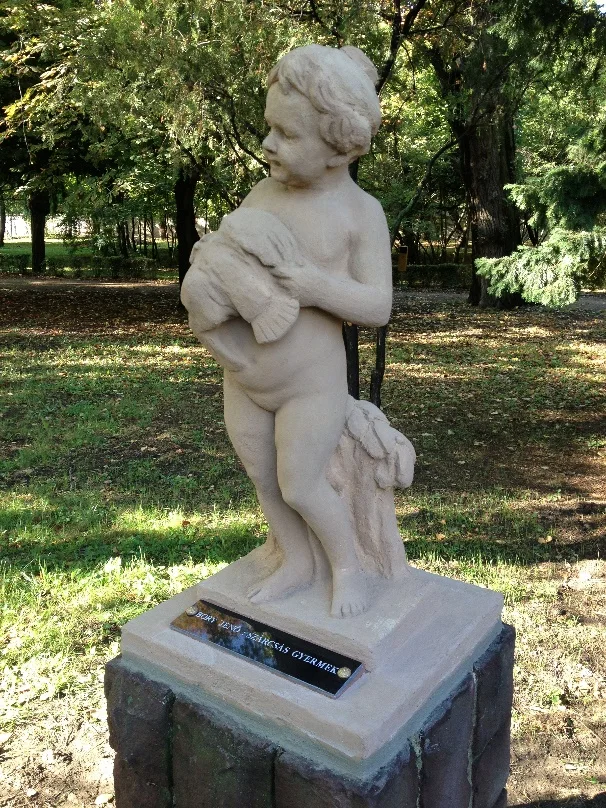
Among the child figures is the work entitled Modern Cupid, which may be regarded as a modern reinterpretation of classical putto representations, as well as the sculpture Child with a Coot, which emphasises the relationship between nature and the child. Bory’s child figures are often putto-like, softly modelled, yet possess an individual character; they therefore connect both with the classical tradition and with the fresher outlook of early twentieth-century sculpture.
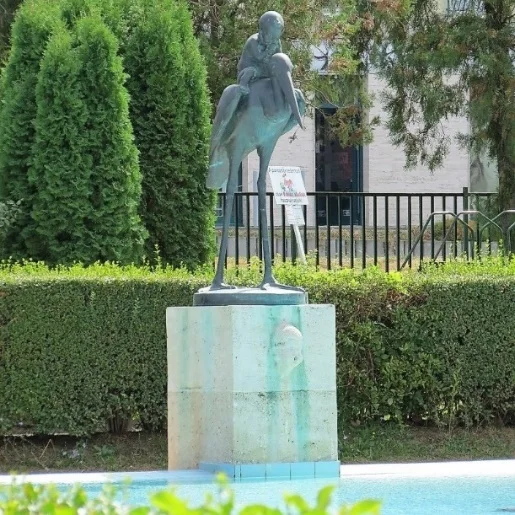
The artist’s interest was not confined to portrait-like depictions of children. The Birth of a Hussar—a little hussar riding on a stork—is a playful allegory in which folk imagination and humour are foregrounded. The sculpture combines a fairy-tale explanation for the birth of a child with the figure of the Hungarian hussar, and has thus become one of Bory’s most cheerful works.
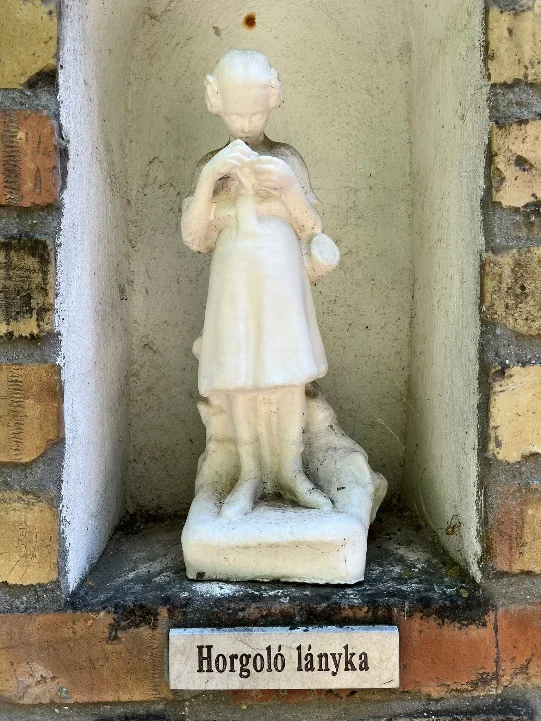
Everyday moments from the world of children also appear in his works. The Crocheting Girl, Pipás Pista and other child figures do not appear as heroes or allegorical characters, but in the midst of their natural activities. His depictions of children therefore occupy a distinctive place in his oeuvre. While his historical and monumental sculptures often serve national remembrance, and his portraits the commemoration of personality, the child figures primarily express joy in life, familial attachment and everyday human beauty. These works reveal Bory Jenő at his most immediate and humane.