


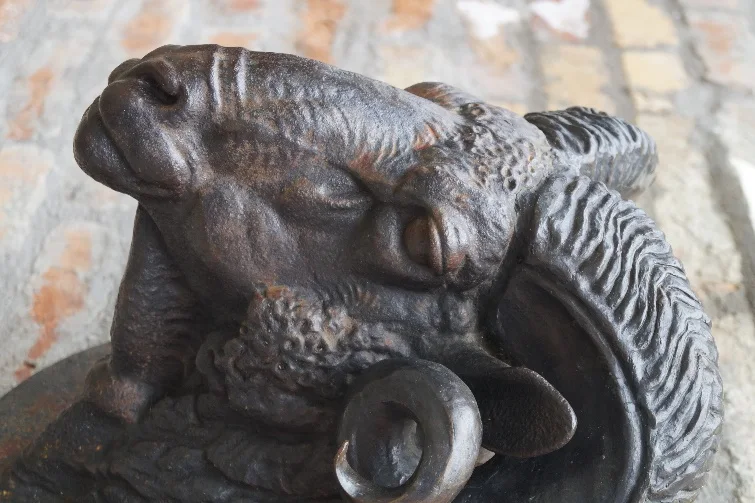
The ram’s head decorating the wall of the lower part of Bory-vár is a good example of how Bory Jenő used animal depictions not only as independent sculptures, but also as integral elements of an architectural composition.
The metal sculpture projecting from the wall like a console is both a decorative architectural ornament and an independent sculptural work. The artist shaped the animal’s characteristic features with great care. The spiralling horns, wavy fleece and head with its calm, slightly contemplative expression create a natural effect. The refinement of the details shows that Bory devoted as much attention to observing the character of animals as he did to his depictions of people.
The figure of the ram has many layers of meaning in art history and cultural history. It is often a symbol of strength, perseverance, fertility and vitality, but may also be interpreted as a symbol of pastoral culture and a life close to nature. In the romantic-symbolic world of Bory-vár, the ram’s head is primarily a decorative element, but it also enriches the distinctive imaginary universe built from animal motifs that may be discovered in many details of the castle.