


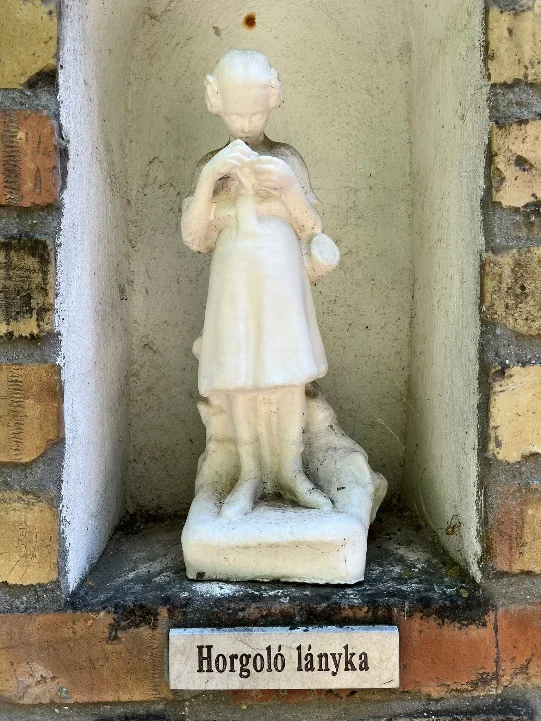
Depictions of children occupy a special place in the oeuvre of Bory Jenő. The child figures appearing in his art are not idealised symbols or allegorical figures, but natural characters observed with affection from everyday life. Crocheting Girl also belongs to this group: it captures a quiet, intimate moment from the world of childhood.
According to Bory Jenő’s recollection, he modelled the statue in 1908 and exhibited it at the Műcsarnok in 1909. The composition depicts a little girl absorbed in her crochet work, focusing all her attention upon it. The lowered head, delicately formed hands and closed composition of the figure create an atmosphere of calm concentration. It is precisely this naturalness that constitutes the work’s particular value. It represents neither an extraordinary event nor a heroic story, but a simple and intimate moment of childhood.
The statue’s style is characterised by the sensitive realism of small-scale sculpture at the turn of the century. The restrained modelling of the folds of clothing, the proportions of the slender child figure and the authenticity of the movement testify that, even at an early stage in his career, Bory paid close attention to observing character and movement. The child’s figure suggests both fragility and independence, while the figure concentrating on its activity also evokes the world of bourgeois education in the period.
Crocheting Girl is known in several materials; versions in bronze, terracotta and plaster have all survived. This suggests that the work was among the artist’s own favourites. The example placed in a wall niche at Bory-vár still clearly conveys one of the most important qualities of Bory Jenő’s depictions of children: the affectionate attention directed towards childhood, nourished by the artist’s family-centred outlook and sensitivity to the beauty of everyday life.