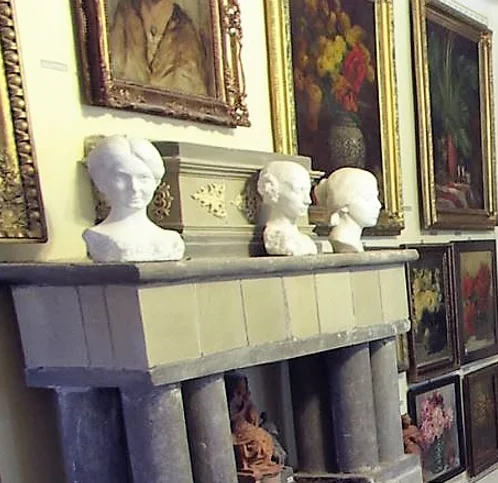
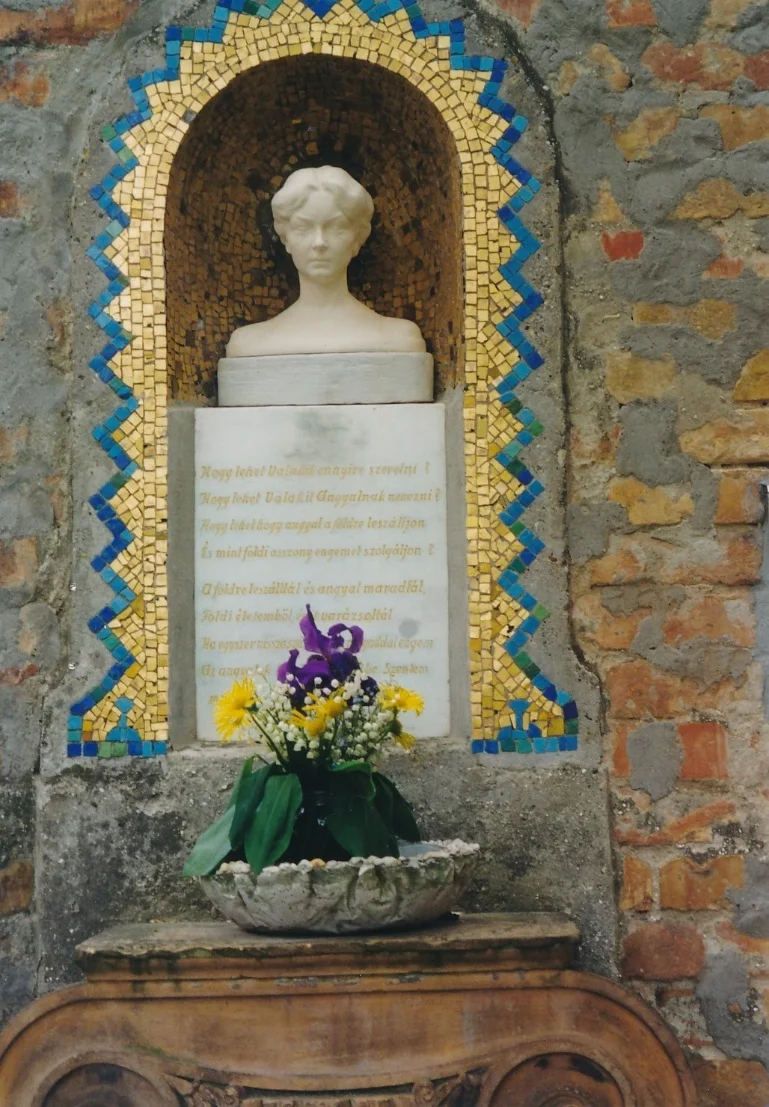
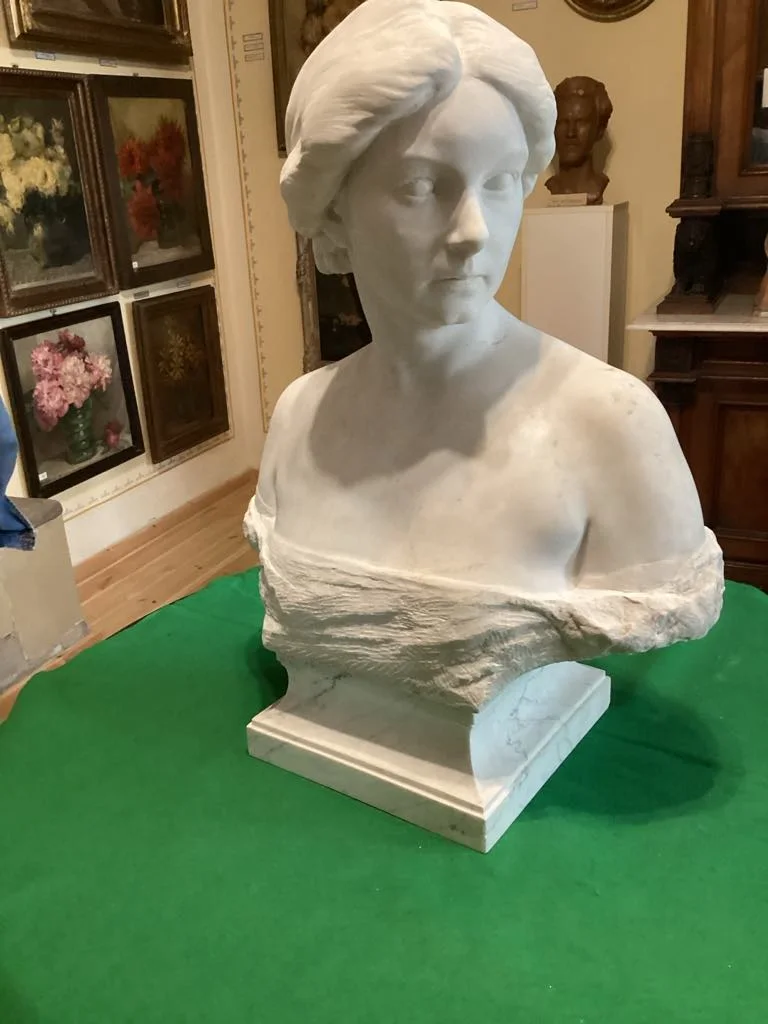
The most personal chapter of Bory Jenő’s portraiture is his depiction of his wife, Komócsin Ilona. Throughout his life, the artist repeatedly modelled his spouse, who was not only his life companion but also an enduring source of creative inspiration.
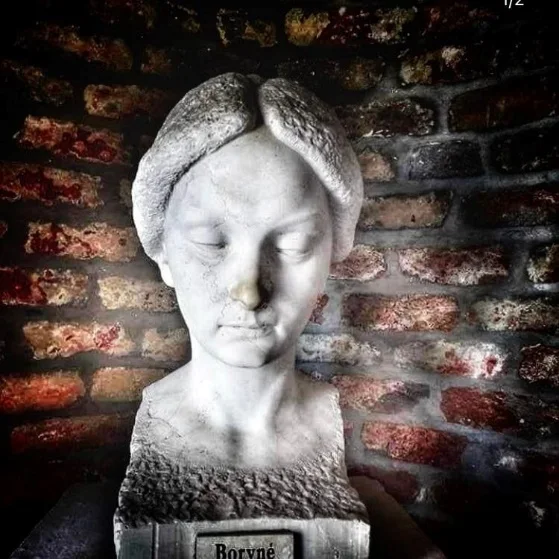
From the early Carrara marble portraits and the bronze bust of 1912 to the later works in marble, concrete and ceramics, one may trace how Boryné’s figure became one of the artist’s central motifs.
These portraits combine the decorative line of Art Nouveau, a classicising serenity and an intimate rendering of character. For Bory Jenő, the portrait did not merely serve to record outward features, but was also a means of expressing emotional attachment and personal esteem.
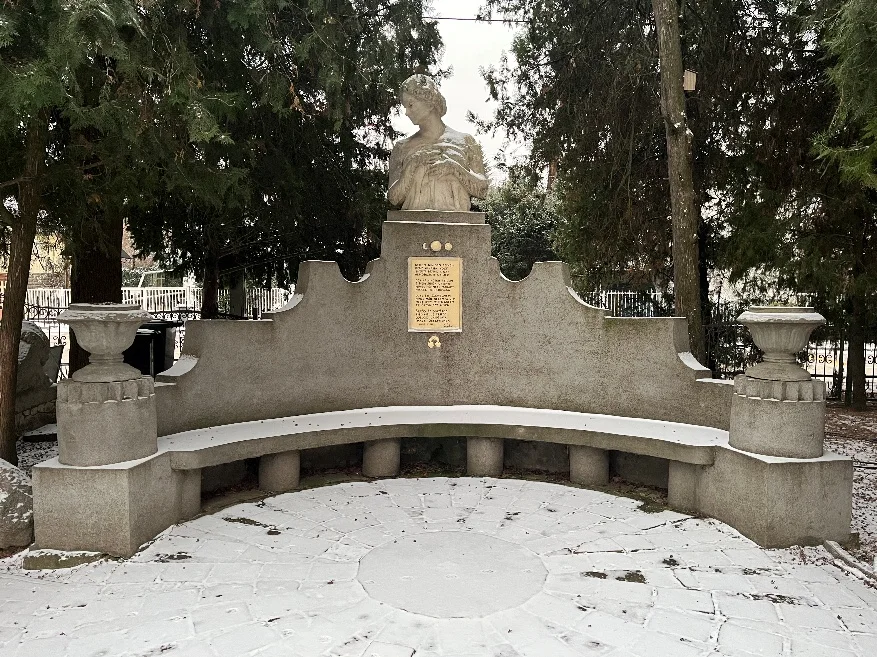
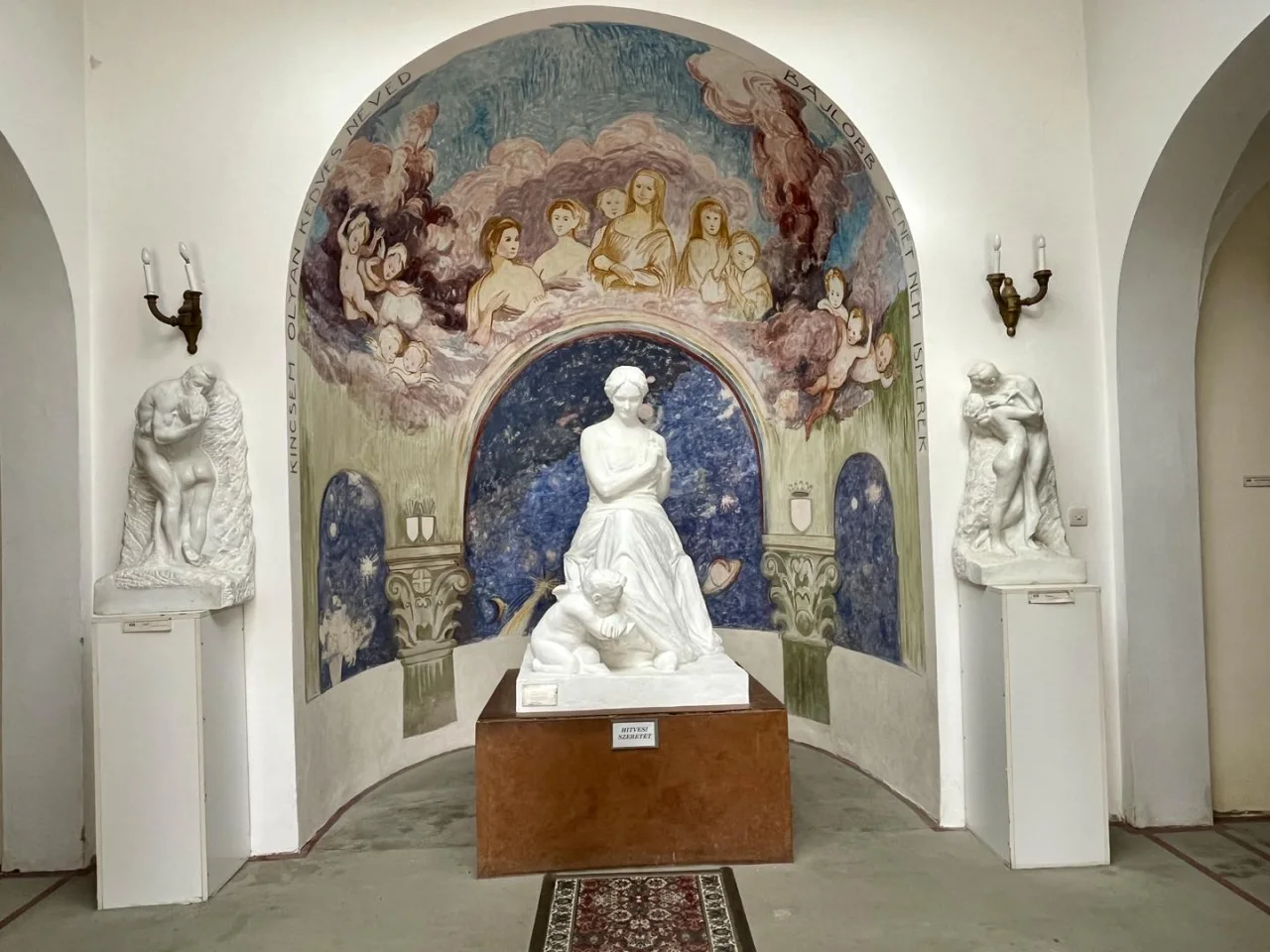
Komócsin Ilona’s presence becomes especially pronounced in the Chapel of Conjugal Love, where she appears as a full-length sculpture, the embodiment of the ‘eternal woman’. In this setting she is no longer simply a model, but a defining figure in the artist’s life, creative creed and the spirit of Bory Castle. The ideals of feminine beauty, fidelity and companionship are all embodied in her figure.
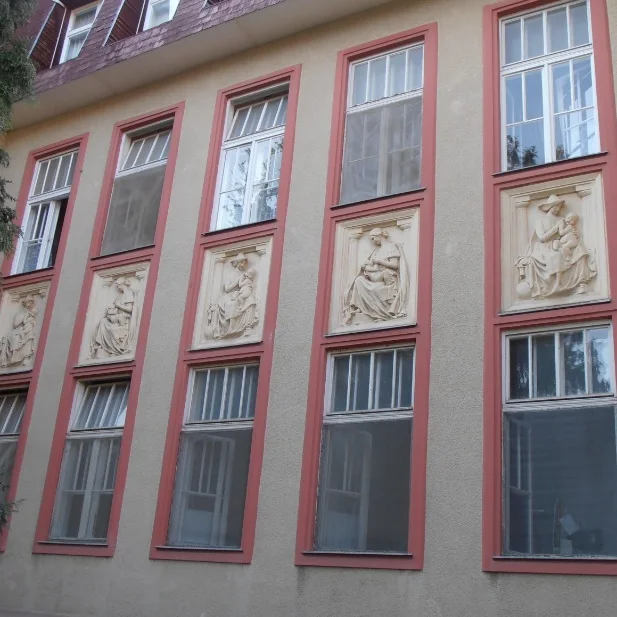
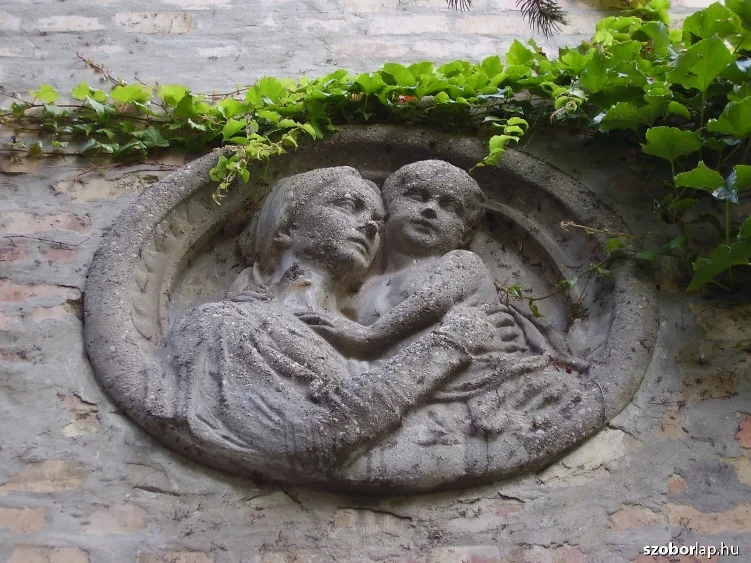
In many of his works, the artist also portrays his wife as a mother. In these works, the female figure is a symbol of care, love and the continuation of life, while personal inspiration is coupled with meaning of universal validity. Through the portrayal of a particular individual, he articulates the general ideal of motherhood and womanhood.
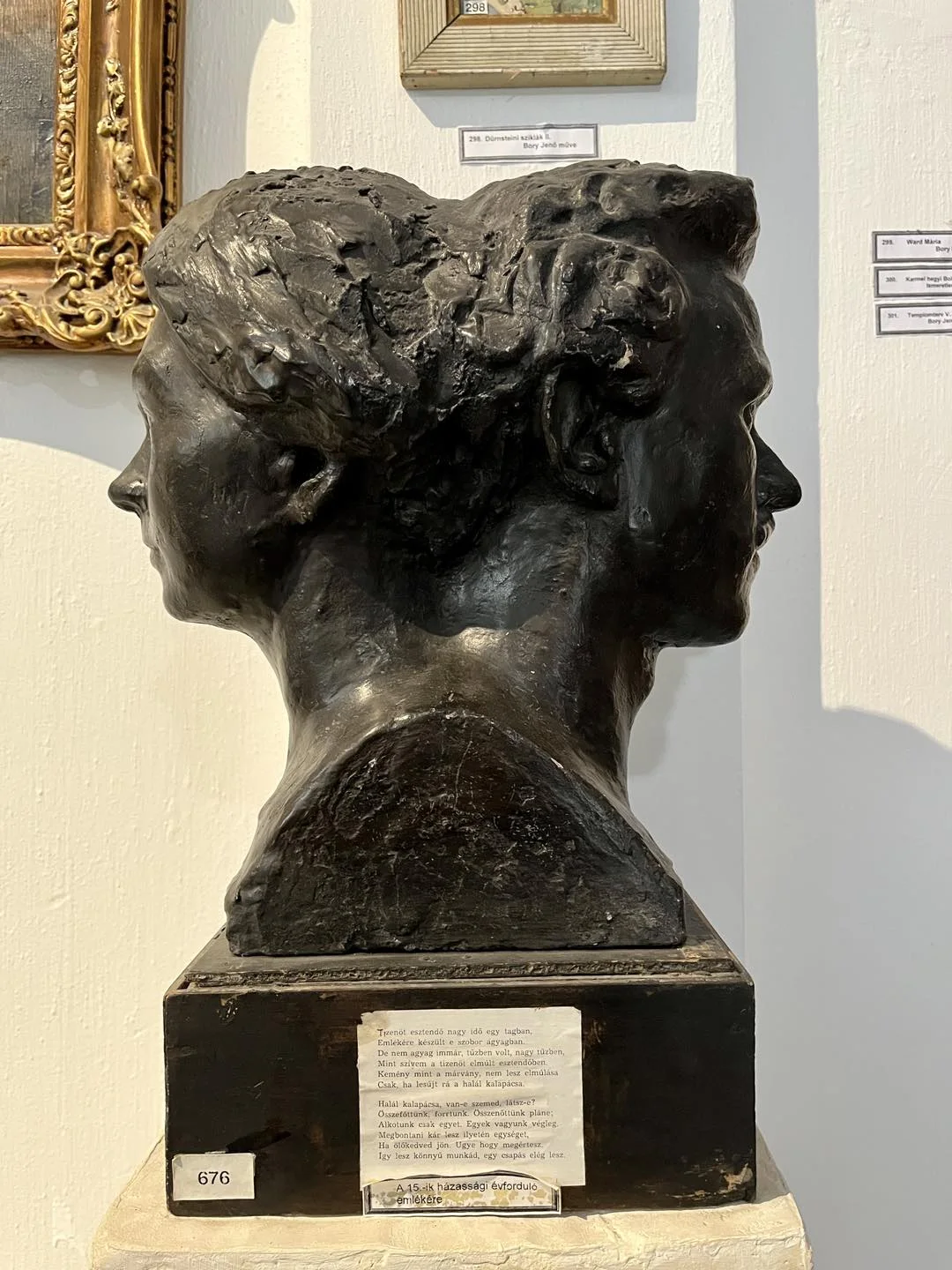
One of the most remarkable representations of the marital relationship is the double portrait entitled A Janus Head (1922), in which the features of the artist and his wife are united in a single composition. The work transcends the conventions of traditional portrait sculpture, becoming a symbol of the couple’s belonging together and of their intellectual and emotional unity.
Komócsin Ilona was thus not merely Bory Jenő’s muse, but one of the recurring and defining figures of his oeuvre. Through her figure, the artist expressed the ideas of love, marital fidelity, motherhood and idealised feminine beauty; for this reason, his portraits may be regarded both as personal declarations and as works of art that convey universal human values.