


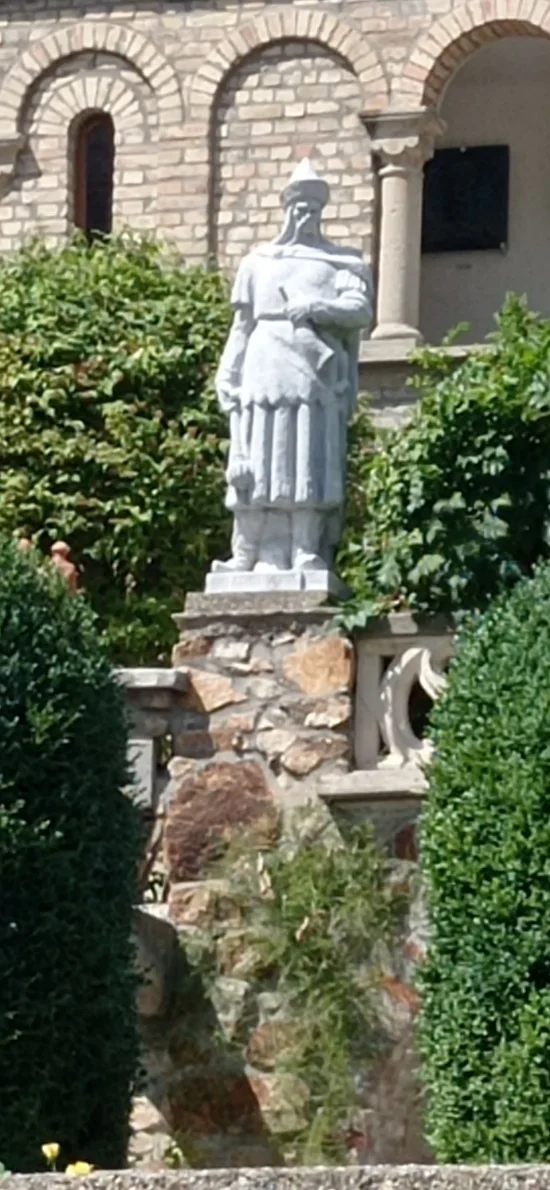
The statue of Chieftain Lehel is a work by Bory Jenő, representing one of the best-known figures in Hungarian history and legend.
- Quartz concrete, 190 cm, Bory-vár
The work presents Chieftain Lehel holding the famous horn that is central to the legend. The statue depicts not only a historical personage, but also a heroic, mythical figure in whom the age of the campaigns undertaken after the Hungarian conquest and Hungarian martial virtues are embodied.
Lehel (also known as Lél) was a descendant of Grand Prince Árpád and, together with Chieftain Bulcsú, took part in the western campaigns. At the Battle of Augsburg in 955, also known as the Battle of Lechfeld, however, they were defeated and taken prisoner. According to the best-known legend evoked by the statue, before his execution Lehel asked for his horn, then, with a sudden movement, struck the emperor a fatal blow, saying that he would be his servant in the underworld. This story also reflects the beliefs of the age, according to which an enemy defeated in life would remain subordinate in the next world as well.
Bory Jenő’s work evokes this dramatic moment from legend: the chieftain’s figure conveys strength and determination, while the horn is not merely a physical object but also carries symbolic meaning. The statue is thus at once a historical monument and a work of art that calls mythical ideas to mind, condensing the heroic and tragic moments of the Hungarian past.