


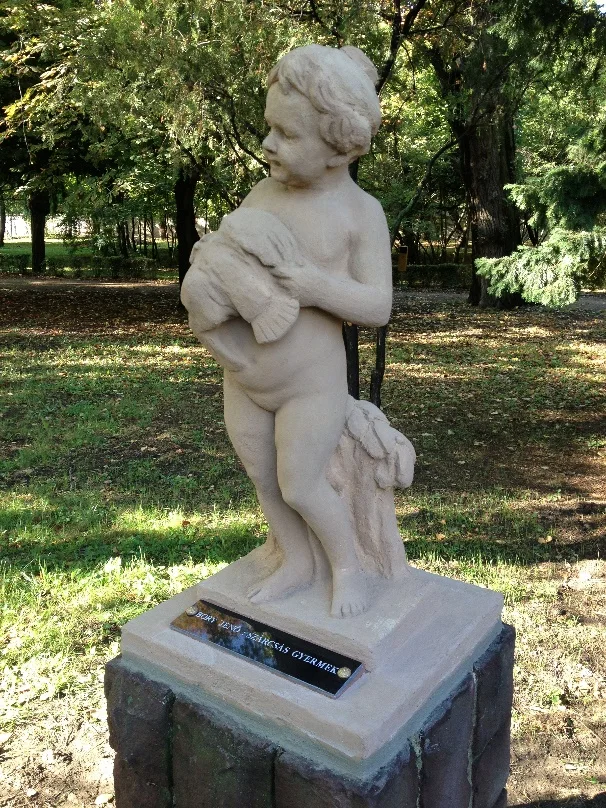
Child with a Coot is a characteristic example of Bory Jenő’s depictions of children. In the artist’s oeuvre, child figures form a distinct group. The putto-like nude child figure evokes classical sculptural traditions, while also speaking in Bory’s own formal language, founded on affectionate observation.
The statue depicts a child holding a bird in one hand – the coot named in the title. The relationship between child and animal is a recurring motif in Bory’s art, as it expresses the harmonious unity of nature and humanity. Behind the figure is a sculptural element rising from the pedestal and recalling plant forms. This motif is an integral part of the work’s composition, while also providing a decorative background for the child figure. The formal language of the statue is characterised by soft modelling, rounded surfaces and natural movement. Bory did not strive for detailed realism, but wished to capture the essence of childhood. The slightly advancing stance, the turn of the head to one side and the attention directed towards the bird make the figure lively and immediate. The child is not posing, but appears as the subject of an everyday, intimate moment.
One example of the work is in the collection of Bory-vár, while another version stands in the garden of the Alba Regia Faculty of Óbuda University. The statue’s presence in this location is particularly interesting, as the history of its origin is not entirely known. It may be connected with the former War Orphans’ Institute, which operated on the site for a long time, but no firm documentation of this is currently available.
Child with a Coot offers a fine example of an important feature of Bory Jenő’s sculpture: the elevation of everyday subjects to artistic status. The charming, small-scale sculptural scene conveys at once the experience of childhood innocence, closeness to nature and playfulness. This humanistic outlook makes the work direct and readily approachable even today, while fitting organically into Bory Jenő’s rich and varied oeuvre.