


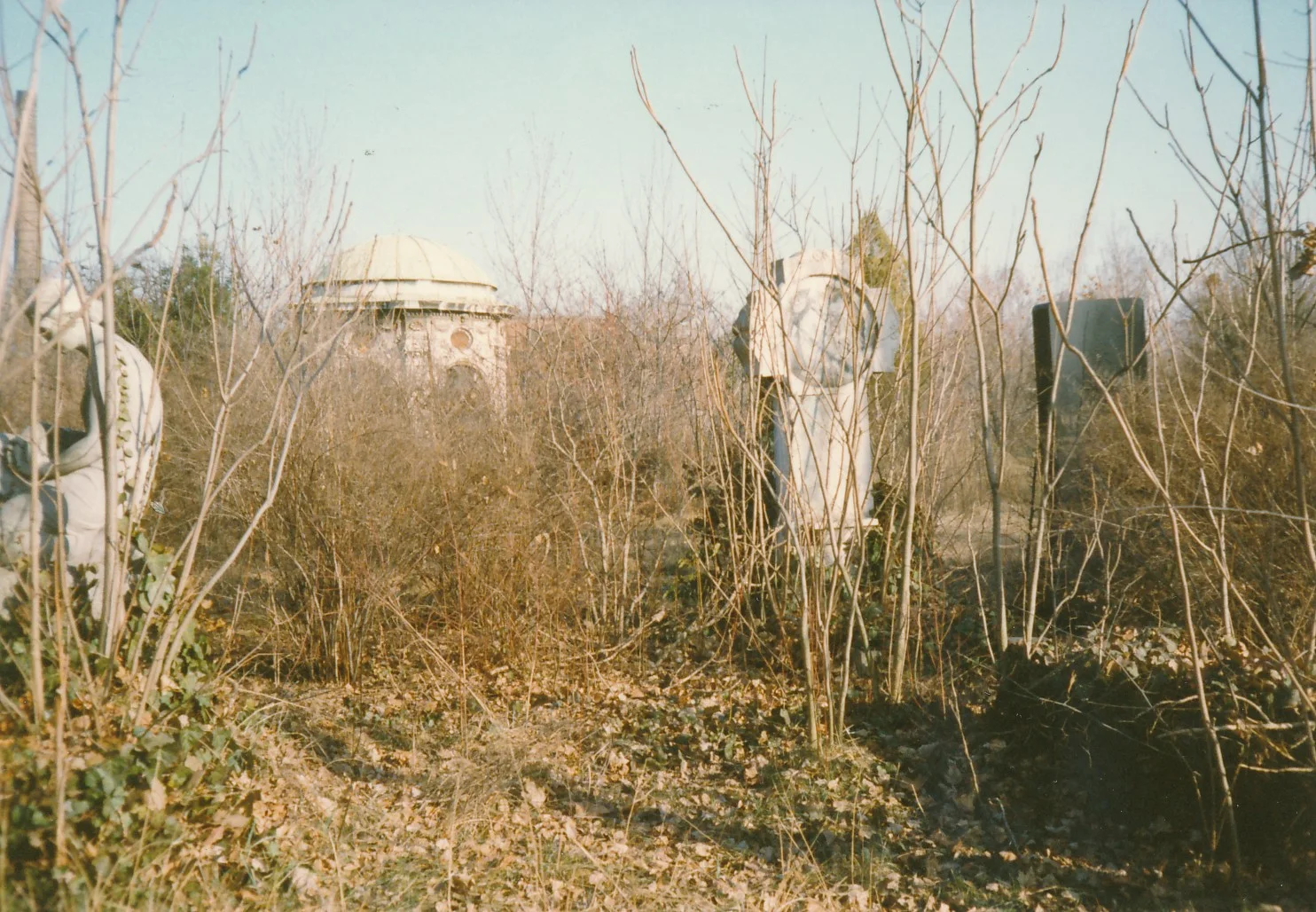
The funerary monument of Erdőssy Béla is a distinctive example of Bory Jenő’s symbolic funerary sculpture: its central element was a bronze relief of a female figure holding a painter’s palette, evoking the deceased’s artistic calling.
Erdőssy Béla (1871–1928) was a painter, graphic artist and teacher at the College of Fine Arts. He became known as a pupil of Lotz Károly, and his etchings, coloured linocuts and landscapes are particularly notable within his artistic work.
His funerary monument was designed by Bory Jenő and inaugurated on 1 December 1929. A bronze relief 70 centimetres in diameter was set into the grave marker, which stands 240 centimetres high. The relief depicted a female figure holding a painter’s palette, alluding in allegorical form to Erdőssy Béla’s creative career and to a life spent in the service of art. The composition did not portray the deceased, but evoked his memory through symbolic means.
The bronze relief of the funerary monument has since disappeared from the grave marker, so the work can no longer be seen in its original form. Fortunately, a plaster model of the work survives and can be viewed in the collection of Bory Castle in Székesfehérvár under the title A festőnő.
The significance of the work is demonstrated by the fact that a drawing of it was published in the journal Iparművészet in 1930. The funerary monument thus preserves not only the memory of Erdőssy Béla, but is also a valuable document of Bory Jenő’s funerary sculpture and allegorical approach.