


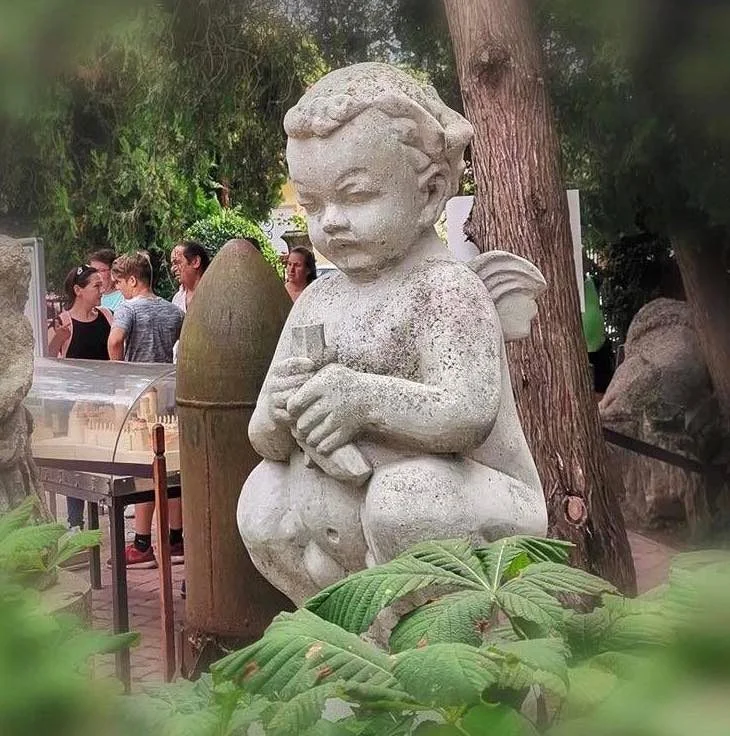
Modern Cupid is one of Bory Jenő’s wittiest works on a mythological theme, playfully bringing together the classical tradition and the modern world of the twentieth century.
The statue depicts the god of love, Ámor (Cupid), but unlike in classical iconography, he holds not a bow and arrow but a pistol in his hand. In Bory Jenő’s own explanation, the modern weapon was necessary because ‘women’s hearts today are so hard that they can be won only with this’. The artist used this playful story to introduce visitors to the work’s world of ideas.
The statue depicts a winged, child-like Cupid, intently observing or gripping his weapon. The putto-like figure recalls the tradition of Cupid representations familiar from Renaissance and Baroque art, while the unexpected appearance of the pistol gives the theme a contemporary and humorous interpretation. The composition turns the mythological figure into an everyday character close to human experience.
The version standing in the lower garden of Bory-vár, near the veranda, is a 90-centimetre artificial-stone statue and one of the garden’s beloved works. The work is also known in several smaller versions: small sculptures, 26 and 17 centimetres high, were made in bronze and ceramic. This suggests that the composition was also important to the artist and counted as a successful work.
The statue also drew attention in the art world of its time. It appeared under the title Cupid with a Pistol at the spring exhibitions of the Műcsarnok in 1933 and 1942. The work clearly demonstrates that Bory Jenő did not approach mythological subjects in a merely tradition-preserving way: he often combined ancient stories with the outlook and humour of his own age. Modern Cupid is therefore not merely a mythological figure, but also a playful, ironic expression of love’s eternal and changing nature.