


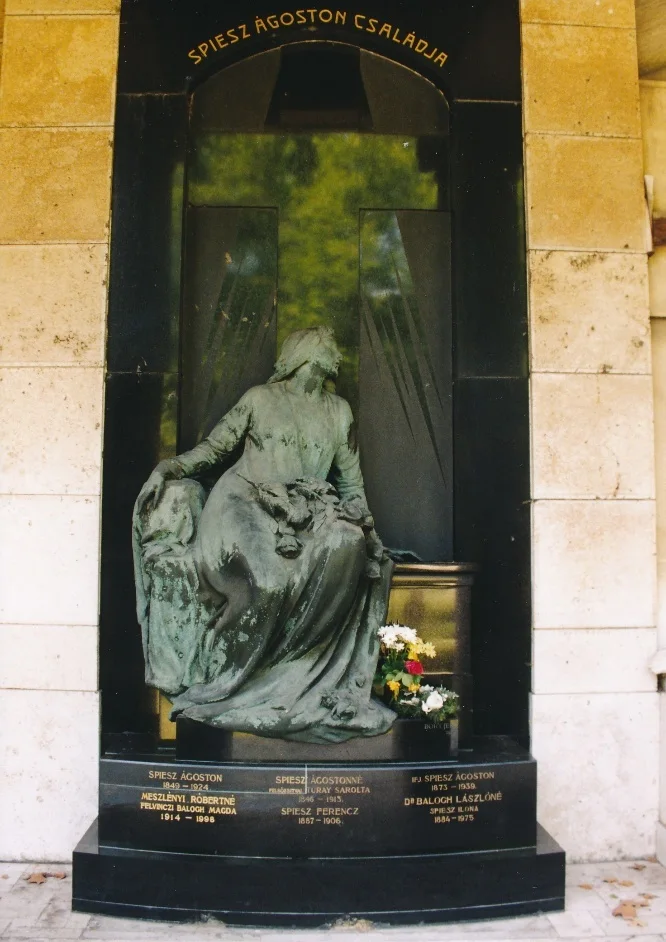
The Spiesz family funerary monument in the arcade of Kerepesi úti Cemetery is one of the outstanding works of Bory Jenő’s early funerary sculpture, expressing the pain of mourning and loss through a swooning female figure.
The funerary monument, in the right-hand arcade of Kerepesi úti Cemetery, was made by Bory Jenő in 1913 in memory of Spiesz Ágostonné. The monumental memorial also reflects the social standing and esteem of the Spiesz family.
The head of the family, Spiesz Ágoston (1849–1924), was an engineer who settled in Hungary from Germany. During his career, he took part in the construction of Ferencváros railway station, and later became known as a property owner and developer in Budapest. His name is still preserved by the so-called Spiesz Villa in Pasarét, which he had built for his family. The family owned several properties in the capital and numbered among the well-to-do bourgeois residents of Buda in that period.
The central feature of the funerary monument is a bronze female figure 180 centimetres high, which, in its seated, swooning pose, conveys mourning and the pain of loss. Bory did not model the portrait of a member of the family, but expressed the grief of the bereaved through an allegorical figure. The figure holds a rose in her lap, while her drooping posture conveys the weight of loss.
The architectural background is in marble and has an overall height of 460 centimetres. The union of the monumental structure and the delicately modelled bronze figure aptly exemplifies Bory Jenő’s endeavour to create harmonious compositions of architectural and sculptural elements in his funerary monuments. The work is signed: “Bory Jenő 1913”.