


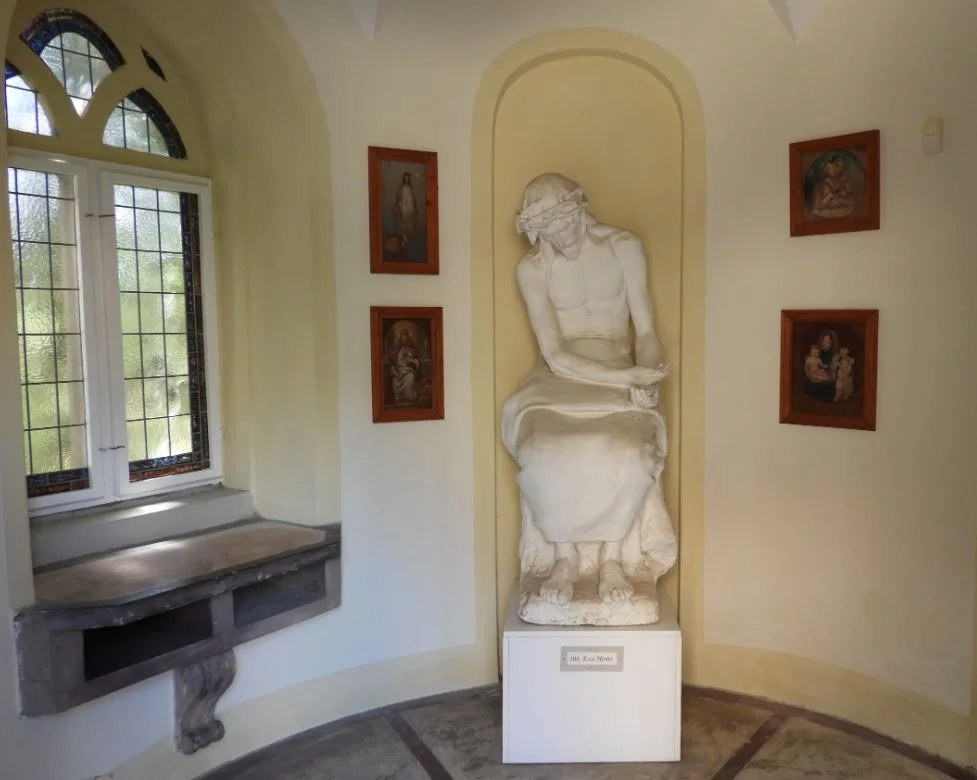
At the foot of the Pointed Tower of Bory Castle is the so-called “guard room”, where the plaster version of Ecce Homo, one of Bory Jenő’s outstanding works, can be seen. Made in 1922, this life-size work depicts Christ tortured and afflicted. The work is distinctive in that, departing from Bory Jenő’s customary, more harmonious formal language, he employed harsher, more angular forms, which convey physical and spiritual suffering even more powerfully.
The utterly broken figure of Christ profoundly moves the viewer, yet the sculpture radiates an unusual inner calm and unshakeable strength. The bowed head, absorbed gaze and stillness express not only pain, but also a kind of inward-looking spiritual peace. With this work, Bory Jenő represented not only suffering, but also human dignity and the strength of faith.
Ecce Homo brought the artist considerable professional success: at the exhibition held at the Műcsarnok in 1922, it won the prestigious Szilárd Rökk Prize. The work remains one of the most moving and expressive creations at Bory Castle, leaving a deep impression on visitors through its powerful emotional impact.