


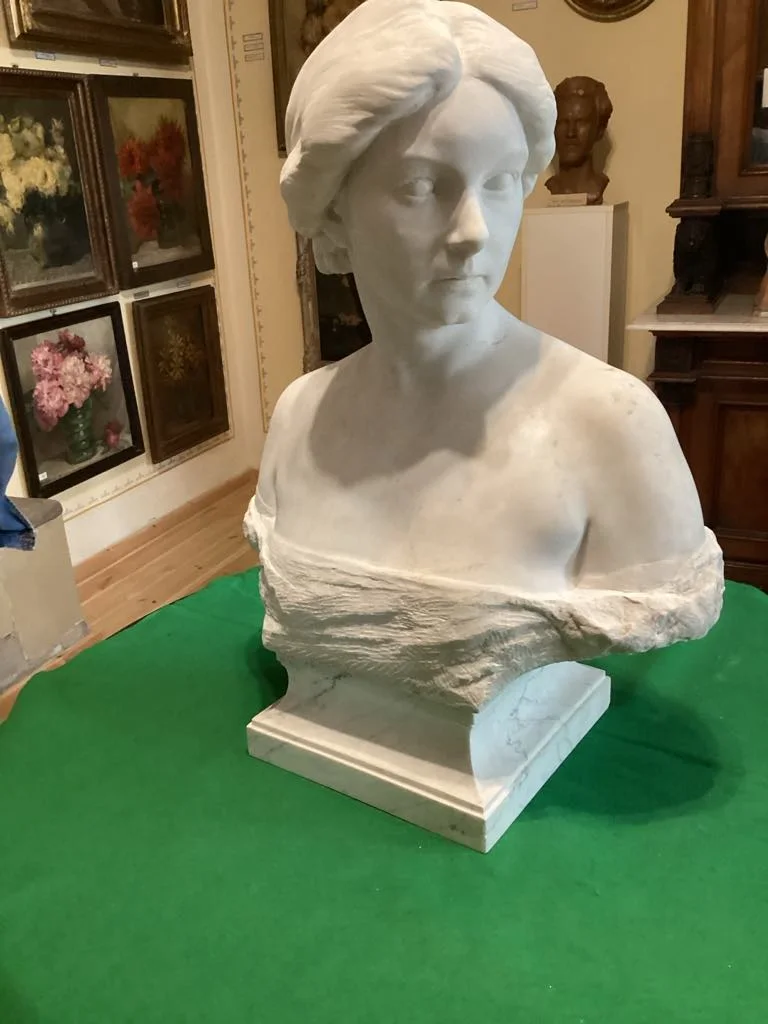
On the round table in the Fireplace Room of the Picture Gallery stands a bust of Mrs Bory, that is, Komócsin Ilona, which Bory Jenő carved in 1913 from Ruskica marble. The work is an outstanding example of the artist’s early portrait sculpture, while also commemorating the lifelong, inspiring relationship that bound Bory Jenő to his wife.
The material of the sculpture, Ruskica marble, is a light-coloured, finely veined stone from the historical Banat region. Because of its excellent qualities for carving and polishing, it was a favoured material for representative architectural and sculptural works during the period of the Monarchy. Its silky surface and restrained pattern make it especially suitable for the sensitive rendering of the human face and fine formal detail.
The bust is, however, more than a portrait. In the figure of the young Komócsin Ilona, Bory Jenő also articulated an ideal of feminine beauty, dignity and inner harmony. The slight turn of the head, the calm gaze and the softly modelled facial features convey a natural elegance. The artist’s attention was directed not towards outward effect, but towards capturing character; the sculpture therefore preserves at once the qualities of a personal portrait and of an idealised female figure.
The full significance of the work can be understood in the context of Bory Castle as a whole. Komócsin Ilona was not only the artist’s wife, but also a painter, creative partner and muse. The commemoration of her figure recurs throughout Bory Jenő’s oeuvre; her portraits can be encountered at numerous points in the castle, traces of an exceptional human and artistic relationship. This marble sculpture of 1913 is an early and particularly sensitive work in that long series, already foreshadowing the loving esteem that would later permeate the entire spirit of Bory Castle.