


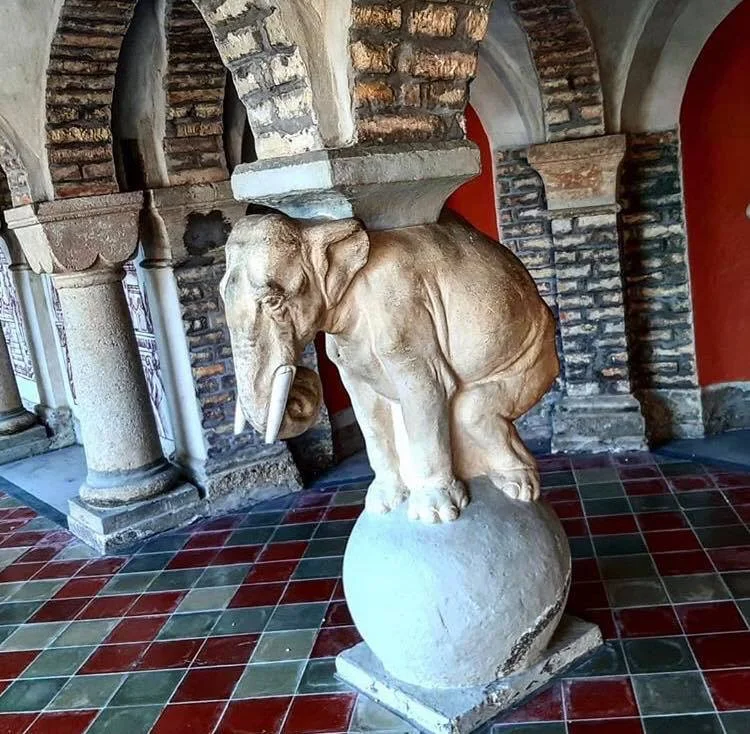
One of the best-known and most beloved animal sculptures at Bory-vár is Elephant, which serves not only as a decorative sculpture but also as an architectural structural element. It is so defining a work that one of the castle’s distinctive spaces, the Elephant Courtyard, takes its name from it.
Bory Jenő modelled the statue entitled Elephant in 1922. The monumental version still visible today in the Elephant Courtyard at Bory-vár fulfils a special architectural role: the animal carries on its back the support of one of the arches in the arcade. This large-bodied animal thus becomes both sculpture and load-bearing structural element, offering a clear example of the close unity of Bory Jenő’s architectural and sculptural thought.
The composition is exceptionally inventive. The elephant standing on a spherical pedestal seems to bear the weight of the architectural element placed above it without immense effort. The animal conveys calm, stability and strength, while its playful treatment softens the monumentality of the architectural setting.
The work is known in several versions. Alongside the large stone architectural sculpture, Bory Jenő also made small bronze sculptures from the same motif. Among these is a version in which a dish or a candlestick is placed on the elephant’s back. A further development of the motif is a dish borne by three elephants, made both as a decorative table ornament and as a functional object.
The different versions demonstrate Bory Jenő’s creative thinking well. He liked to work with the same motif at different scales and for different functions: from the monumental architectural sculpture to the small bronze sculpture, and to the candlestick understood as a functional object. The figure of the elephant thus became at once an architectural decorative element, a sculptural study and an object of decorative art.