


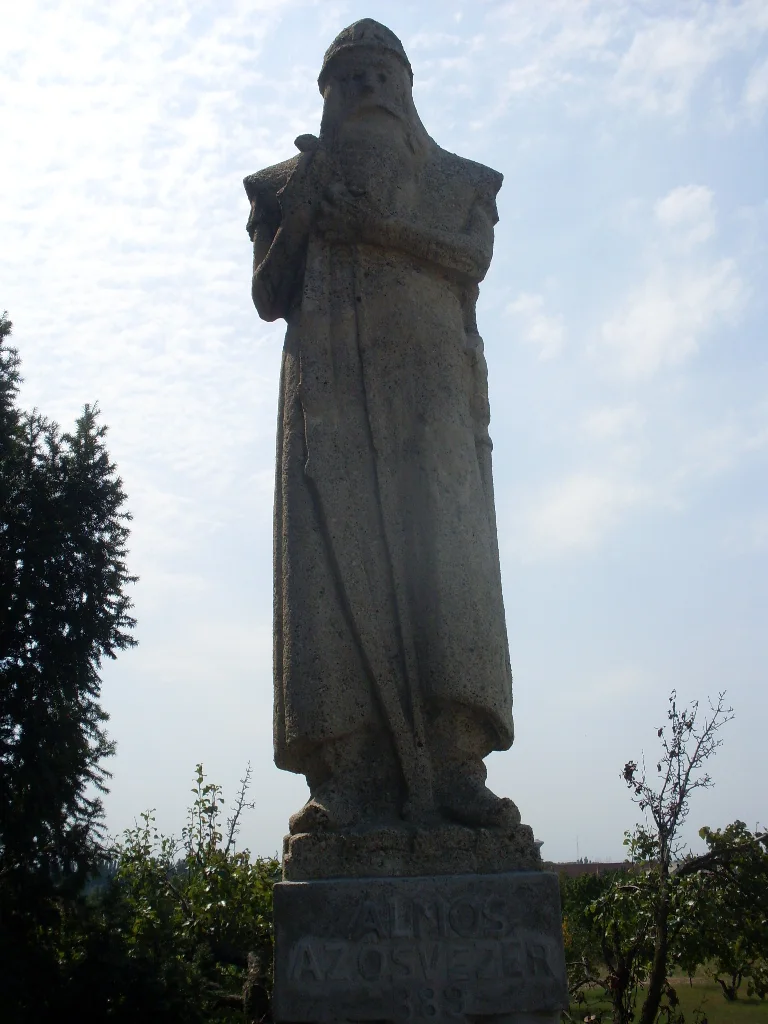
The historical arcade begins with the earliest figures of the Hungarian past. One of these is Chieftain Álmos, whom tradition regards as the leader of the Hungarians before the Conquest and as the father of Grand Prince Árpád.
According to medieval chronicles, Álmos was a defining leader of the alliance of Hungarian tribes in the second half of the ninth century. The final stage of the Hungarians’ migration, which ultimately led to the occupation of the Carpathian Basin, is associated with his name. Tradition holds that his son, Árpád, assumed the leading role from him and directed the Hungarian tribes that carried out the Conquest.
Bory Jenő’s statue shows Álmos in a dignified, compact pose. The long-bearded figure, wearing weapons, evokes both the tribal leader and the forefather who founded a dynasty. The composition gives emphasis not to military action, but to authority and permanence. This accords well with the role attributed to Álmos in historical memory: he embodies the link between eastern origins and the Hungarian state that came into being in the Carpathian Basin.
In the historical pantheon of Bory-vár, the figure of Álmos opens the long series that leads the visitor through the rulers of the House of Árpád and the outstanding personalities of Hungarian history. His statue evokes an age preserved for posterity chiefly by the tradition of the chronicles, from which the history of Hungarian statehood began.