


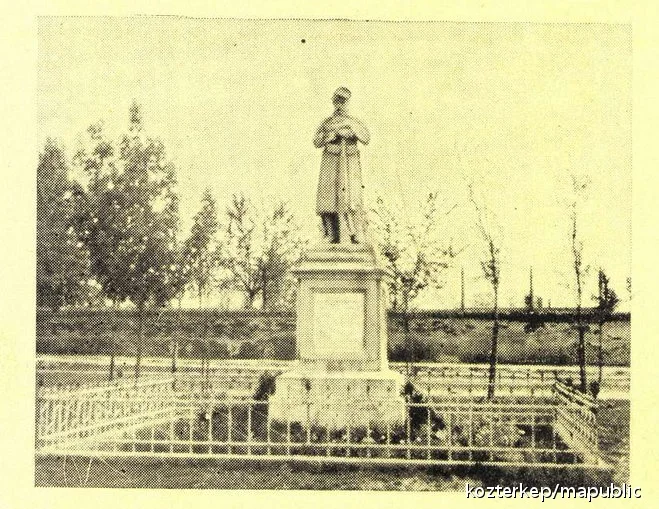
The Berekböszörmény War Memorial was unveiled on 12 June 1927. The work occupies a special place in Bory Jenő’s oeuvre, since for a long time even researchers were uncertain of its authorship. Only later did it become clear that the village memorial was a version of the same Bory soldier type that also appeared at Dunapentele.
The work’s central figure is a honvéd leaning on his weapon. The soldier does not appear as a victorious hero, but as a weary, reflective man. His expression reflects sadness, fatigue and resigned dignity. This restrained tone is one of the most characteristic qualities of Bory’s war memorials.
The memorial originally stood in a space enclosed by a wrought-iron fence, facing the road. It was later turned, its base altered, and the names of the victims of the Second World War were also added. It is consequently now a shared memorial site to the heroes of the settlement who fell in both world wars.
The Berekböszörmény memorial clearly demonstrates Bory Jenő’s endeavour to portray heroic death not in a romantic or heroicising manner, but with human dignity and compassion.